FREE SHIPPING SELECT PRODUCTS FOR US ORDERS OVER $55

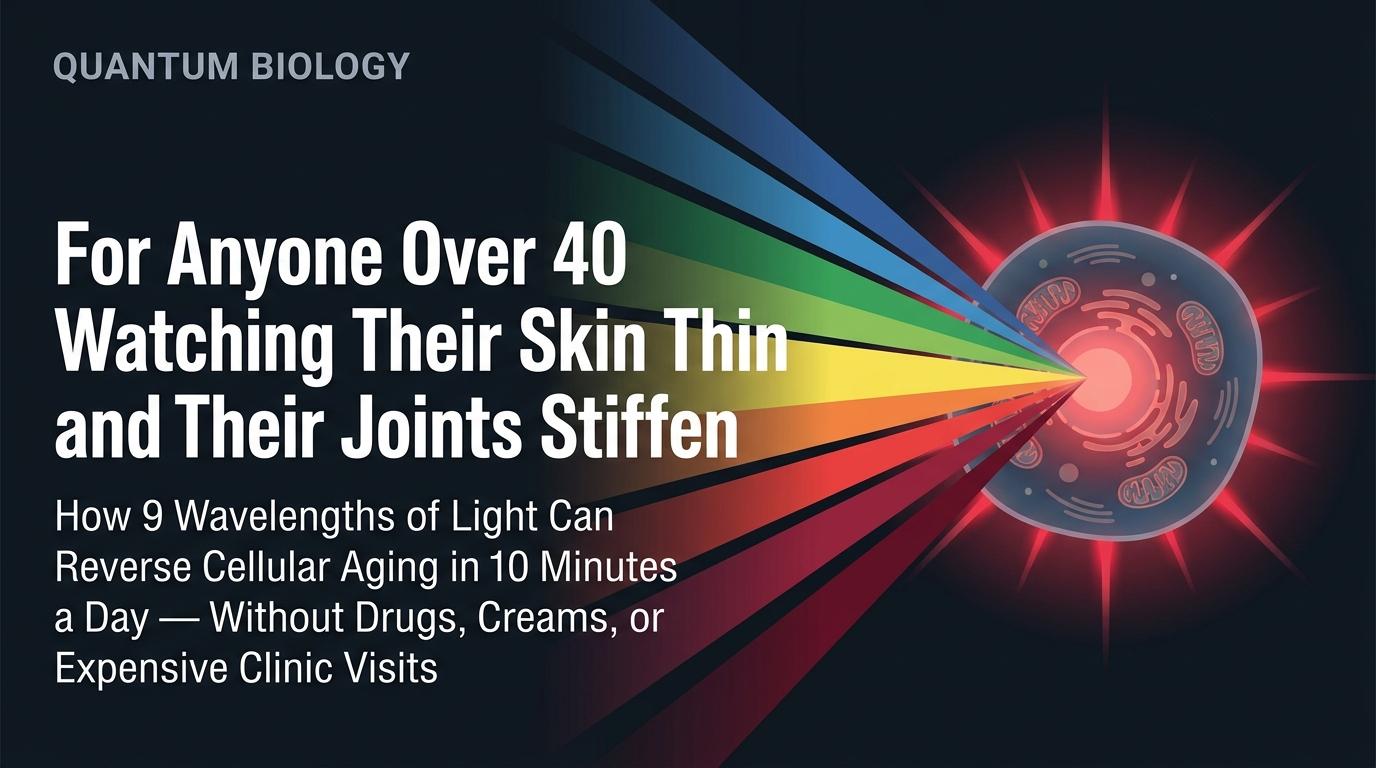
For Anyone Over 40 Watching Their Skin Thin and Their Joints Stiffen: How 9 Wavelengths of Light Can Reverse Cellular Aging in 10 Minutes a Day
Without drugs, creams, or expensive clinic visits. Most red light panels use only 2 of the 9 clinically studied wavelengths. This free report shows you what the full spectrum can do for your skin, your cells, and your brain — and why the research changes everything.
I spent six months reading photobiomodulation research before I understood what was actually happening inside my cells. Not the marketing. Not the wellness-bro Instagram posts. The actual peer-reviewed science on how specific wavelengths of light interact with cytochrome c oxidase — the enzyme at the heart of your mitochondrial electron transport chain.
Here's what shocked me: the therapeutic window for light-based cellular repair spans from roughly 480 nanometers all the way to 1060 nanometers. That's a 580-nanometer range of clinically relevant wavelengths. And yet, nearly every consumer red light panel on the market uses exactly two of them.
Two wavelengths out of nine. That's 22% of the therapeutic window.
If you've been using a standard panel and wondering why your results plateaued, this is almost certainly why. You've been getting a fraction of what photobiomodulation can actually do.
"The Secret To Aging Backwards"
How near-infrared and red light therapy supercharges your cells, skin, and brain. A wavelength-by-wavelength breakdown of the nine clinically studied light bands — from blue (480nm) to deep infrared (1060nm) — and what each one targets in your body.
- Why 660nm and 850nm alone leave most of the therapeutic window untouched — and which seven wavelengths you're missing
- Which wavelength NASA studied for wound healing, and which one reaches deeper than standard NIR
- How 670nm interacts with retinal cells (and why eye researchers are paying attention)
- The 810nm brain-penetration research that's changing how we think about cognitive support
- What 1060nm does that no other wavelength in the panel can replicate
Get the full report — free. Instant download.